Cart
News
Releases

AMY GRUPO: A Young Company Surpassing Two Plastic Industry “Giants,” with Near-Leading ROE and Outstanding Cash Flow Conversion
Compared with two leading listed plastic industry companies with strong operating performance, AMY GRUPO presents a notable growth story: its revenue has risen to the top of the peer group, its ROE is approaching that of industry leaders, and its operating cash flow demonstrates outstanding conversion from earnings. The margin pressures seen in 2025 primarily reflected trade policy factors and the characteristics of export markets, rather than a deterioration in the company’s underlying operational fundamentals.
Why Compare AMY with BMP and NTP?
BMP and NTP are two leading names in Vietnam’s listed plastic-based building materials industry, with decades of brand heritage and market experience. In contrast, AMY GRUPO is a young company with only 10 years of history, focusing on a different product segment: vinyl flooring and finished surface materials.
Although the three companies offer different product lines, their businesses are all affected by PVC resin prices and operate within the broader building materials and finishing materials value chain. Therefore, placing AMY GRUPO alongside BMP and NTP is not intended to provide an absolute product-by-product comparison, but rather to highlight the position of a young company when measured against the industry’s high standards in terms of scale, profitability, working capital management, and cash flow quality.
AMY Stands Out in Revenue Scale and Market Expansion
According to audited financial statements, AMY GRUPO recorded net revenue of VND 6,998 billion in 2025, higher than NTP’s VND 6,751 billion and significantly above BMP’s VND 5,510 billion. For a company that is only around 10 years old, reaching and surpassing the revenue scale of long-established industry names demonstrates AMY GRUPO’s ability to expand its markets, organize production, and fulfill large-scale orders.
The main driver behind this leading position is the export market, which accounts for approximately 65% of AMY GRUPO’s revenue. This is an important distinction: rather than relying solely on domestic market growth, AMY has established a significant presence in international markets, particularly the United States, where products must meet stringent standards in terms of quality, delivery capabilities, and long-term customer relationships.
Looking back over the past five years, the differences in the growth trajectories of the three companies become even more apparent. Between 2021 and 2025, BMP’s revenue increased from VND 4,553 billion to VND 5,510 billion, equivalent to approximately 21% growth, while NTP’s revenue rose from VND 4,824 billion to VND 6,751 billion, representing approximately 40% growth. Meanwhile, AMY GRUPO’s revenue increased approximately 3.6 times over the same period. This growth rate indicates that AMY is not only expanding rapidly but is also gradually transitioning from an emerging company into a business platform of significant scale within the finished materials industry.
Source: Companies’ financial statements.
Profitability: The Gap with Industry Leaders Has Narrowed Significantly
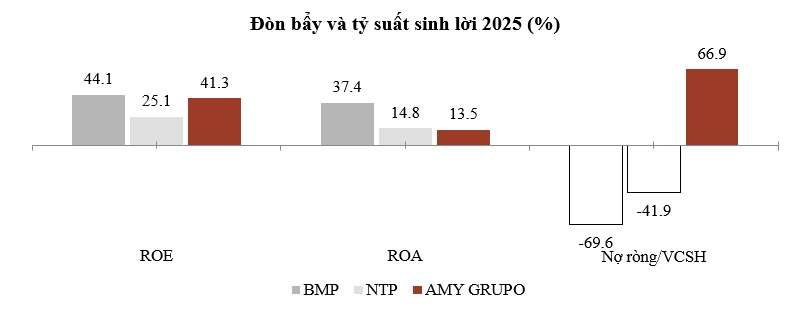
Source: Calculations based on companies’ financial statements.
The most notable indicator is ROE. In 2025, AMY GRUPO achieved an ROE of 41.3%, only slightly below BMP’s 44.1% and significantly above NTP’s 25.1%. For a company undergoing rapid expansion, achieving a return on shareholders’ equity close to that of a leading company that has operated steadily for decades is a positive signal of operational efficiency, capital turnover, and the ability to convert revenue growth into shareholder profits.
One factor investors should consider in the appropriate context is AMY GRUPO’s capital structure. Its net debt-to-equity ratio is higher than that of BMP and NTP, both of which have highly stable business models and make little use of financial leverage. However, in AMY’s case, most borrowing reflects the working capital requirements of its export business rather than financing risky long-term investments.
This difference is primarily attributable to the companies’ business models. While BMP and NTP are more heavily focused on the domestic market, approximately 65% of AMY’s revenue comes from exports, mainly to the United States. This model typically requires greater working capital because production, transportation, and payment cycles are longer, but in return, it provides greater room for growth and access to larger markets.
For export orders, ocean transportation alone can take approximately two months. As a result, the company needs short-term borrowings to finance working capital while goods are in transit and awaiting payment. As of the end of 2025, more than 90% of AMY’s outstanding debt consisted of short-term borrowings serving this purpose.
2025 Profit Margins: Diverging Trends Between Companies Benefiting from the Raw Material Price Cycle and Those Affected by Trade Policies
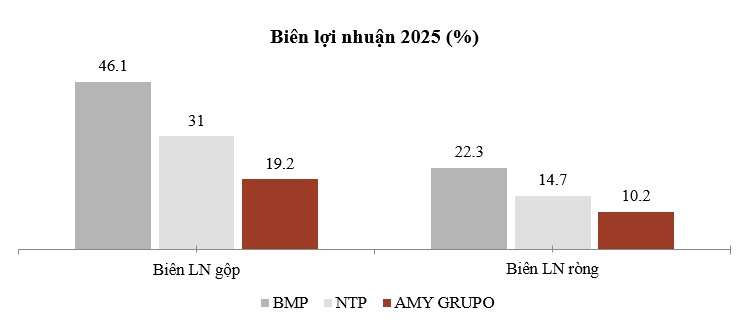
Profit margins were the clearest indicator of the difference between AMY and the other two companies in 2025.
While PVC resin prices remained at relatively low levels, providing BMP and NTP with significant input cost advantages and enabling them to record high gross margins of 46.1% and 31.0%, respectively, AMY GRUPO was more directly affected by tariff policies in its export markets. Its gross margin therefore declined to 19.2%, reflecting a year marked by unfavorable external factors rather than a deterioration in its core competitiveness.
2025 can be viewed as a period in which the two groups of companies were affected by different factors: BMP and NTP benefited from the raw material price cycle, while AMY absorbed the impact of trade policies in its key export markets. Importantly, even under these conditions, AMY maintained a double-digit net profit margin and continued to generate strong operating cash flow. As tariff pressures are more fully reflected in selling prices, customer mix, or product portfolios, AMY’s margins still have room for improvement.
Working Capital Management: The Fastest Cash Conversion Cycle in the Peer Group
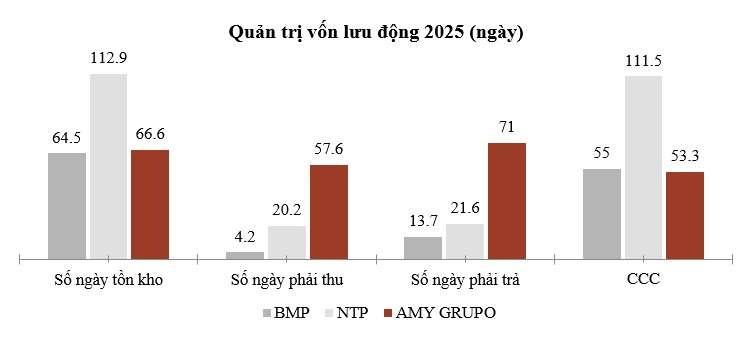
In addition to growth and profitability, working capital management is another important indicator of operating quality. A commonly used measure is the Cash Conversion Cycle (CCC). The lower the CCC, the more efficiently a company utilizes its working capital.
Source: Calculations based on companies’ financial statements.
AMY GRUPO’s days sales outstanding stood at 57.6 days, higher than BMP’s 4.2 days and NTP’s 20.2 days. This is a common characteristic of export-oriented businesses, where international transportation and payment cycles are significantly longer than those of domestic distribution models. Therefore, this indicator should be viewed as a characteristic of the markets AMY serves rather than as an isolated weakness in receivables management.
On the other hand, AMY manages its inventory almost as efficiently as BMP, at 66.6 days versus 64.5 days, and significantly better than NTP, at 112.9 days. At the same time, the company benefits from substantially longer payment terms with suppliers, at 71 days compared with 13.7 days for BMP and 21.6 days for NTP.
As a result, AMY’s CCC stands at only 53.3 days, the lowest among the three companies, compared with 55 days for BMP and 111.5 days for NTP.
In other words, although AMY GRUPO’s export-oriented model results in a longer receivables cycle, the company effectively offsets this through inventory management and favorable supplier payment terms. As a result, AMY requires less working capital to generate each đồng of revenue than either of the two industry leaders, highlighting the company’s strong operating discipline despite its rapid growth.
Operating Cash Flow: A Key Highlight of Earnings Quality
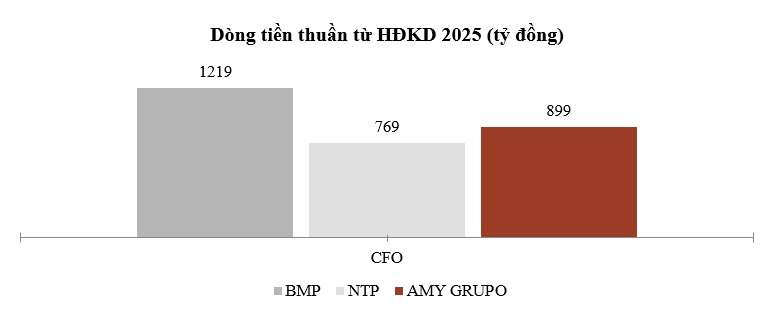
AMY GRUPO’s short cash conversion cycle is most clearly reflected in its net cash flow from operating activities (CFO) in 2025, an indicator of whether accounting profits are actually being converted into cash or remain tied up in working capital.
Source: Companies’ financial statements.
BMP recorded CFO of VND 1,219 billion, equivalent to 99% of net profit after tax. NTP generated CFO of VND 769 billion, or 77% of net profit after tax. Most notably, AMY GRUPO generated CFO of VND 899 billion, equivalent to nearly 126% of net profit attributable to non-controlling interests. The highest CFO-to-net-profit ratio among the three companies indicates that AMY’s growth and profitability are supported by actual cash generation rather than being reflected solely in accounting figures.
In other words, AMY GRUPO’s earnings are not merely figures on the books but are being effectively converted into cash. This is an important indicator of the quality of the company’s earnings.
Compared with two of the most efficient plastic industry companies listed on the Vietnamese stock market, AMY GRUPO is demonstrating an increasingly clear market position: its revenue scale has moved to the top of the peer group, its ROE is approaching industry-leading levels, and its operating cash flow shows the strongest earnings-to-cash conversion among the three. These results are particularly noteworthy given that AMY remains significantly younger than its peers and operates an export-oriented business model with higher requirements for working capital, product standards, and delivery capabilities.
The lower profit margin in 2025 should be viewed in the context of the trade policy impact on AMY’s key export markets, while domestic peers benefited from the raw material price cycle. Importantly, even during this period, AMY GRUPO maintained a double-digit net profit margin, generated operating cash flow exceeding accounting profit, and maintained the lowest cash conversion cycle among the three companies. These are signs that AMY’s operational fundamentals are resilient, its earnings quality is being validated by actual cash generation, and there remains room for improvement when external conditions become more favorable.
With an established revenue scale, profitability approaching industry-leading levels, outstanding cash flow quality, and room for margin improvement during more favorable cycles, AMY GRUPO is emerging as one of the notable value investment opportunities in Vietnam’s finished materials industry.
Source: AMY GRUPO: A Young Company Surpassing Two Plastic Industry “Giants,” with Near-Leading ROE and Outstanding Cash Flow ConversionRelated News

AMY GRUPO Ahead of Its IPO: From a Building Materials Manufacturer to a Billion-Dollar Revenue Growth Story
In 2025, AMY GRUPO generated nearly VND 7 trillion in revenue, with more than 75% coming from international markets. In Q1 2026, the company continued to record strong growth of over 36%. According to Vietcap's forecasts, AMY GRUPO's revenue and profit could achieve compound annual growth rates (CAGR) of 23% and 24%, respectively, during the 2025-2028 period.
View Details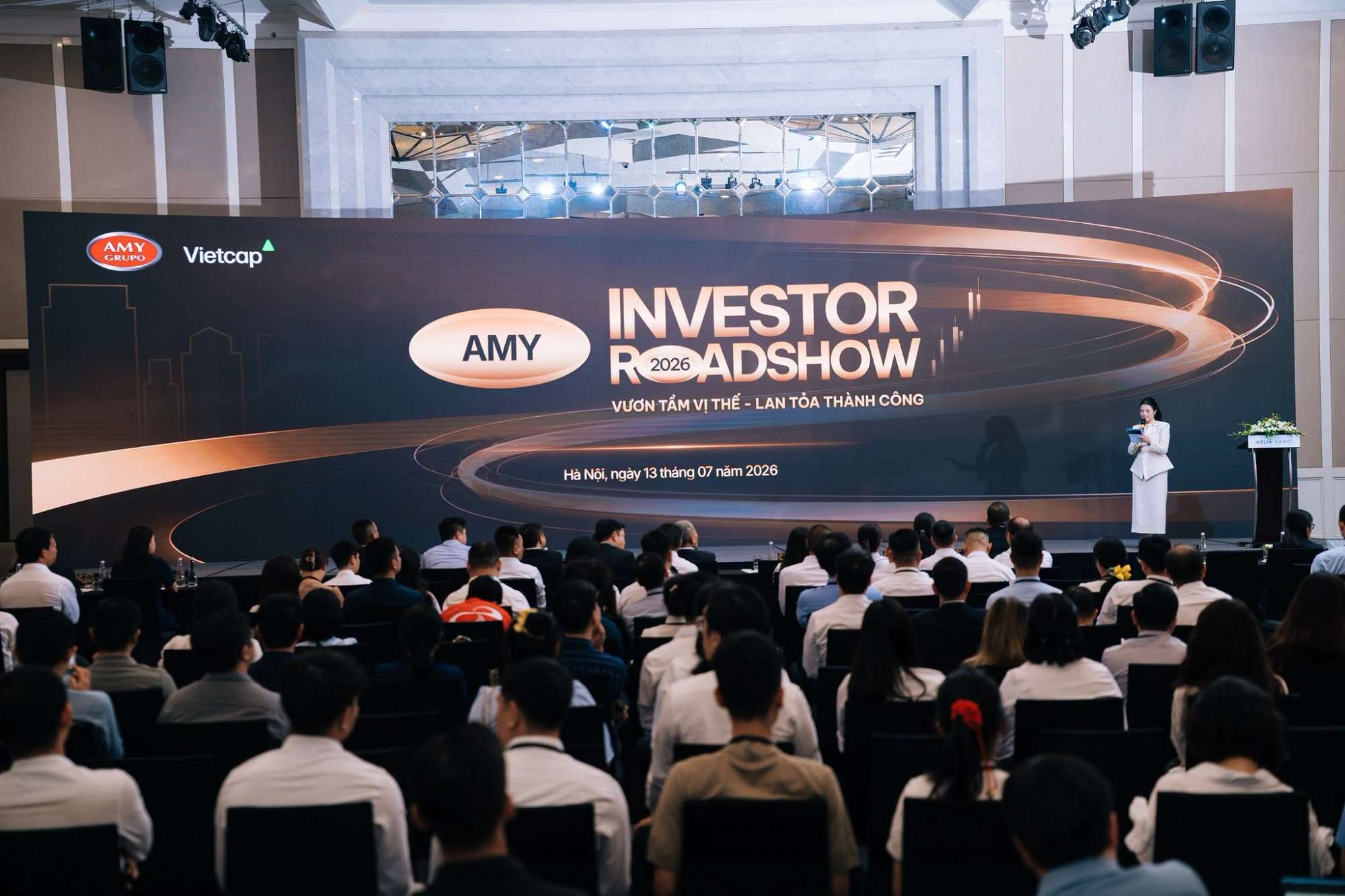
Vietcap: AMY GRUPO Poised to Enter a New Growth Cycle
After 10 years of development, AMY GRUPO is entering a new phase of growth with its planned initial public offering (IPO), with the company targeting a listing on the Ho Chi Minh City Stock Exchange (HOSE) under the ticker AMY, expected in Q4 2026.
View Details
IPO AMY GRUPO - Key Information Every Investor Should Know
Against the backdrop of renewed investor interest in manufacturing companies with solid operational foundations and long-term growth strategies, AMY GRUPO's Initial Public Offering (IPO) has attracted considerable attention from the investment community. According to industry experts, beyond reviewing financial performance, investors should evaluate a company's overall growth strategy, capital allocation plan, and competitive strengths before making an investment decision.
So, what are the key factors investors should consider before participating in AMY GRUPO's IPO?
View Details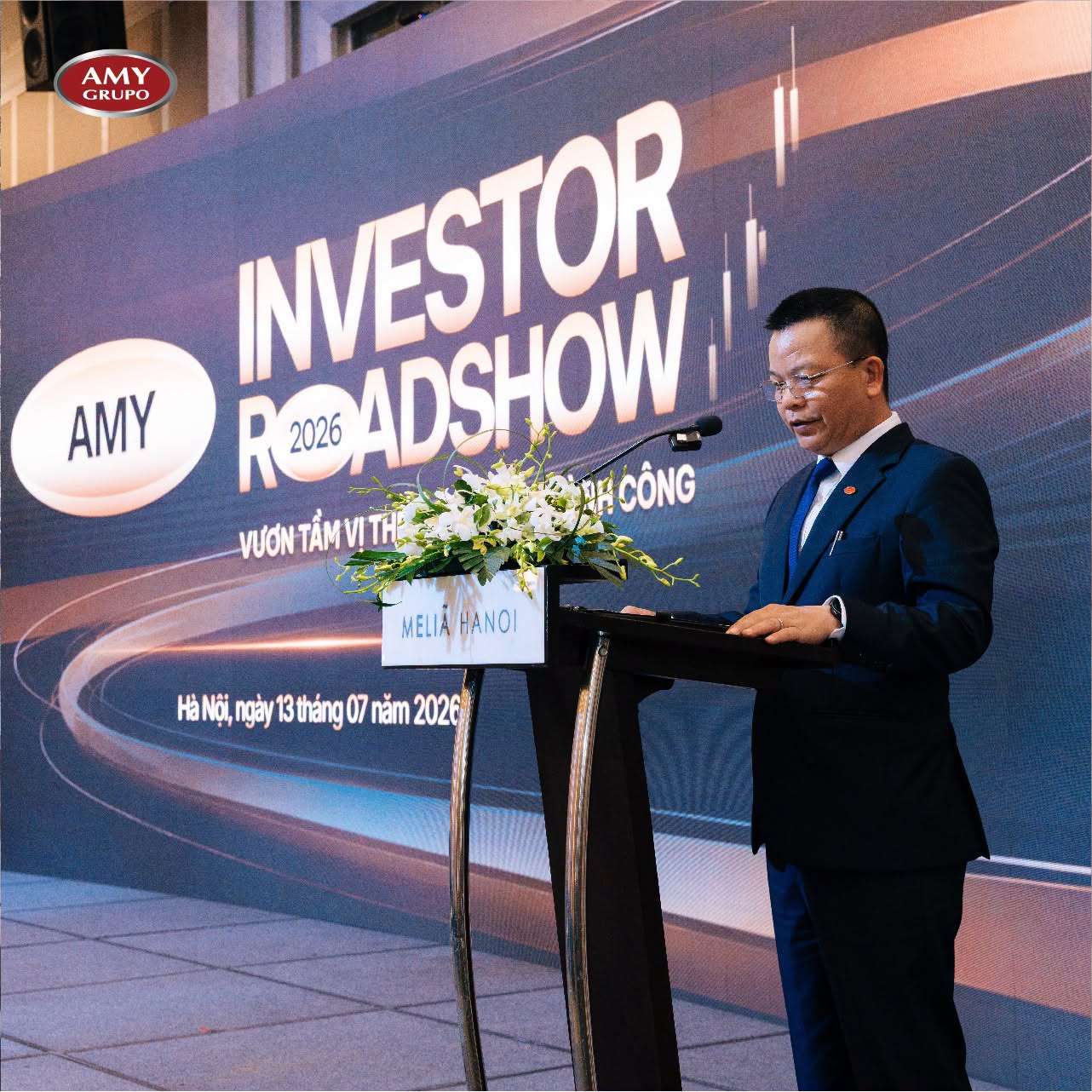
AMY GRUPO Hosts Investor Roadshow 2026: "Elevating Position – Spreading Success"
On July 13, 2026, AMY Industry Joint Stock Company (AMY GRUPO) hosted the AMY GRUPO Investor Roadshow 2026 under the theme "Elevating Position – Spreading Success" at Meliá Hanoi Hotel.
View Details
A Building Materials Conglomerate with Billion-Dollar Revenue Ambitions Is Ready for Its IPO
As Vietnam’s stock market continues to welcome large-scale manufacturing enterprises, AMY GRUPO is preparing to make a significant debut with its Initial Public Offering (IPO) and planned listing on the Ho Chi Minh Stock Exchange (HOSE) in 2026. This milestone marks the company's transformation from a fast-growing industrial manufacturer into a publicly listed corporation with ambitions to expand on a global scale.
View Details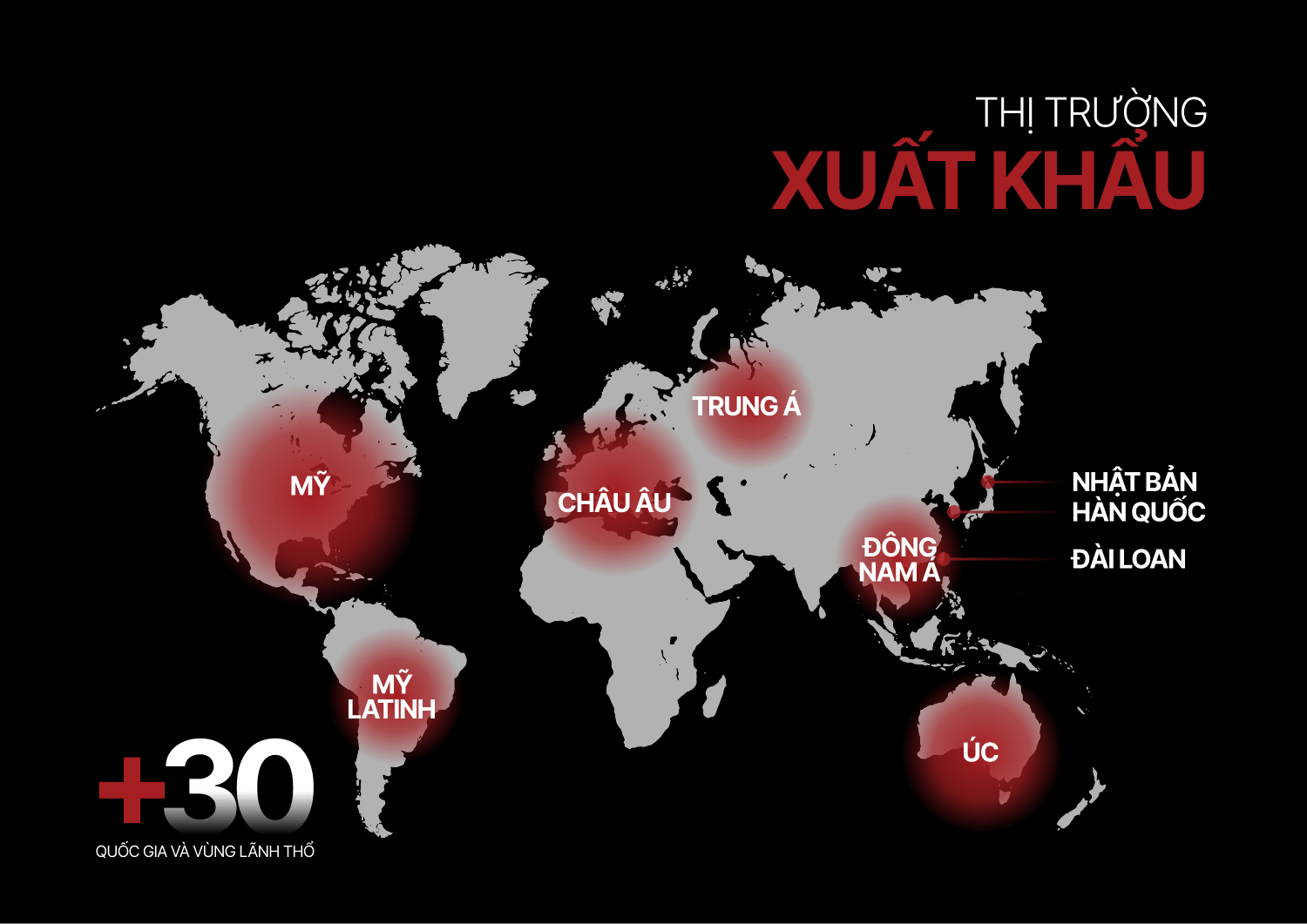
AMY GRUPO Officially Receives IPO Approval – Laying the Foundation for Sustainable Growth and an Attractive Investment Opportunity in the Stock Market
After more than a decade of development, AMY GRUPO has reached a significant milestone by officially receiving the Certificate of Registration for the Initial Public Offering (IPO) from the State Securities Commission of Vietnam (SSC).
View Details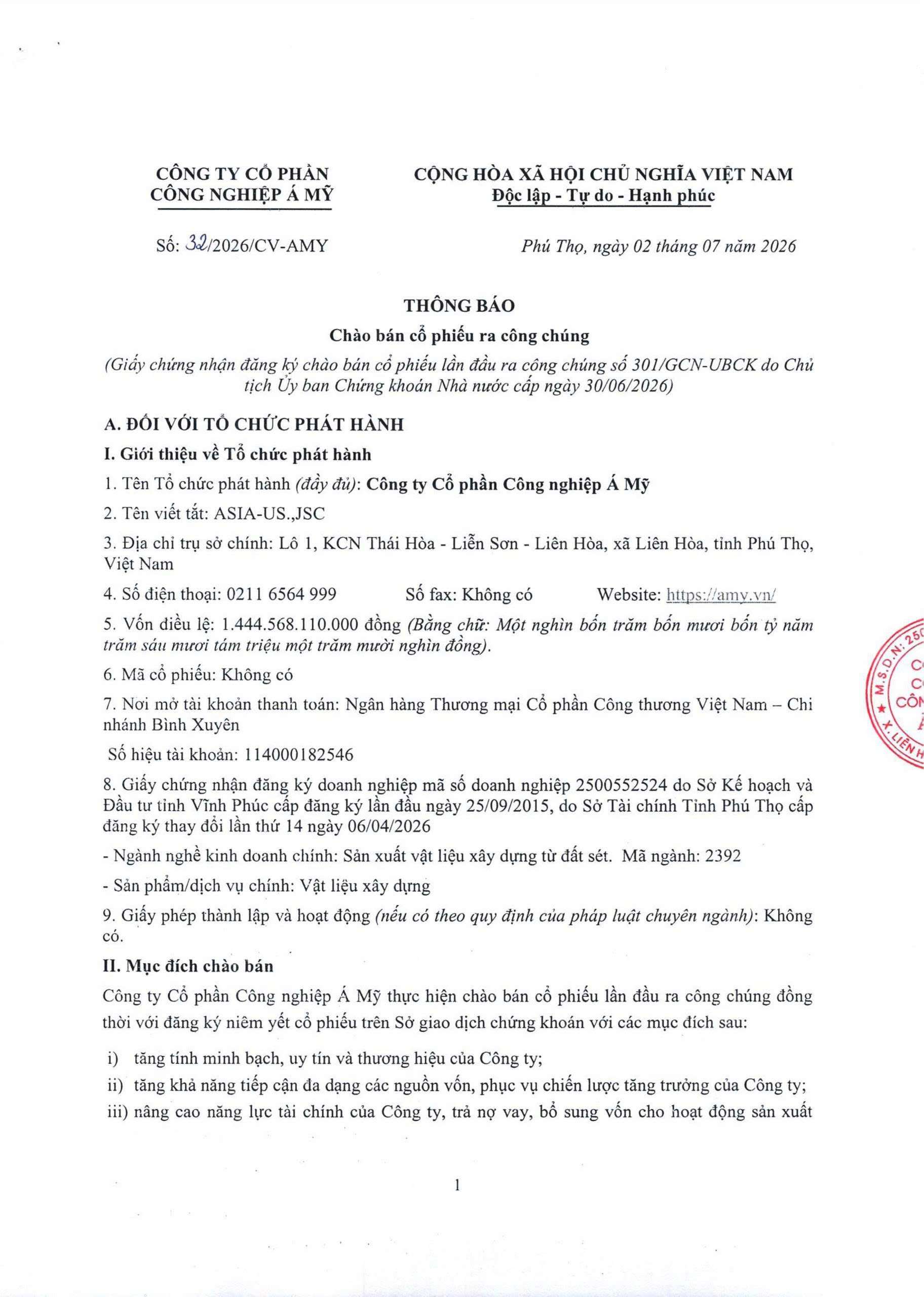
ASIA-US INDUSTRIAL JOINT STOCK COMPANY (AMY GRUPO) Announces the Initial Public Offering (IPO) of 16,100,000 Shares (Phase 1)
View Details
Strong Growth with Trillion-VND Profit Target: Another Vietnamese Enterprise Prepares for IPO
Having successfully navigated the market consolidation period in the export sector during early 2026, AMY GRUPO maintained its strong growth momentum in the first quarter. This performance demonstrates the effectiveness of the Group's strategy to diversify its markets, optimize operational efficiency, and advance toward complete control of its global supply chain.
View Details
Vietnam’s Building Materials Industry Enters a New Growth Cycle: Value Creation Becomes the New Competitive Advantage
After years of being affected by the slowdown of the real estate market, oversupply pressures, and rising input costs, Vietnam’s building materials industry is entering a new recovery cycle. However, as the competitive advantage derived from production capacity gradually narrows, market leadership is increasingly shifting toward companies capable of creating added value through technology, management excellence, and integrated product ecosystems.
View Details